

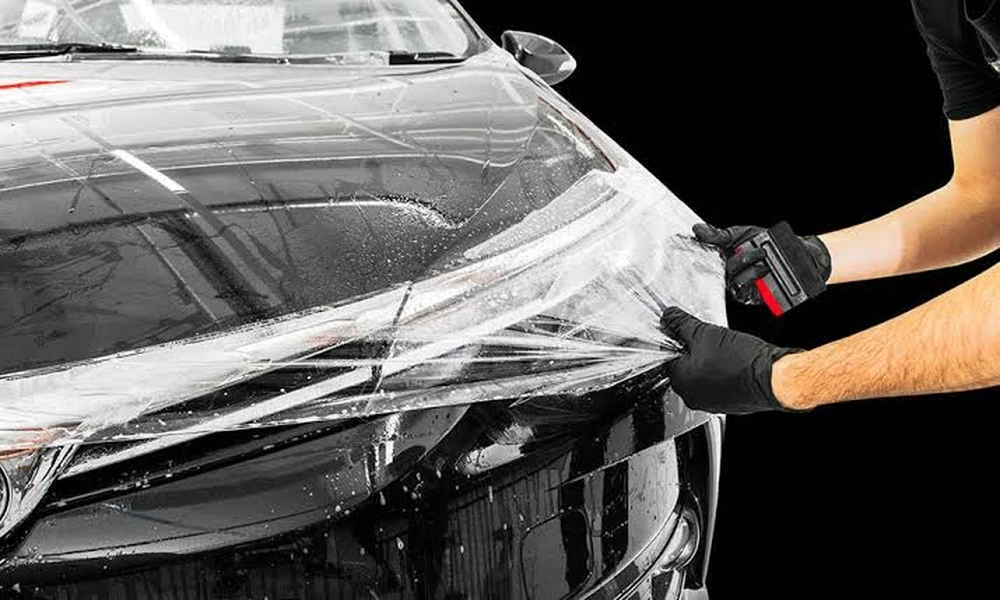
For a long time, car owners who wanted a new colour faced a frustrating compromise. Vinyl wraps delivered style but offered little defence against stone chips. Clear protection film defended the paint but left the colour unchanged. Choosing one meant giving up the other, or paying for both and layering them.
Coloured TPU film was developed to close that gap. It puts colour and protection into a single product, and it has changed how many detailers and owners think about customisation. To understand why, it helps to look at what the material is and how it differs from the options that came before.
A Quick Look at the Material
TPU stands for thermoplastic polyurethane. It is a type of plastic that combines flexibility with toughness. It can stretch around curves, recover its shape after being pressed and absorb impacts without cracking. Those properties are why it became the standard material for clear paint protection film.
Coloured versions take the same base and add a pigmented layer, along with a top coat that gives the surface its finish, whether gloss, satin or matte. The result looks like a colour change but behaves like protection film.
How It Compares With Vinyl
Vinyl wraps are typically made from PVC. They are thinner than TPU film and designed mainly for appearance. Vinyl is widely used for commercial graphics and colour changes because it is cost-effective and comes in a huge range of colours and effects.
The trade-off is protection. Thin vinyl offers limited resistance to stone chips, and it does not have the self-healing properties found in many TPU films. Vinyl can also become brittle with age, particularly in strong sunlight, which can make removal more difficult.
By comparison, tpu color ppf is thicker and more elastic. It absorbs small impacts that would chip paint under vinyl, and many versions include a top coat that allows fine scratches to soften with heat. It also tends to stay flexible for longer, which helps with clean removal later.
None of this makes vinyl a bad product. It is simply designed for a different job. For short-term styling or commercial branding, vinyl often makes sense. For owners who want a long-term colour change that also protects the paint, TPU colour film is usually the better fit.
The Finishes Available
Gloss
Gloss colour film aims to look like fresh factory paint. When installed well, it can be hard to distinguish from a respray at normal viewing distance.
Satin
Satin has a soft sheen that highlights body lines without sharp reflections. It suits modern designs and two-tone combinations.
Matte
Matte gives a flat, non-reflective look that stands out strongly. It is the most dramatic option and needs specific care products to keep the texture even.
Within each finish, colour choices have widened considerably. Whites, greys and blacks remain popular, but deeper blues, greens and other tones are increasingly common.
What Owners Gain
The biggest benefit is doing two things at once. One installation changes the look and protects the original finish. That can simplify the process and, in many cases, reduce total cost compared with applying vinyl and clear film separately.
Reversibility is another advantage. Because the original paint stays underneath, the car can be returned to its factory colour later. This is useful for owners who plan to sell, for leased cars where the agreement allows it, or simply for anyone who might want a change again in the future.
Repairs are also more manageable. If a panel is damaged, the film on that panel can be replaced rather than repainting and blending colour across several panels.
Limitations Worth Knowing
TPU colour film costs more than vinyl, partly because the material is more expensive and partly because installation requires more skill. The thicker film is less forgiving and needs careful heat control and stretching technique.
Colour choice, while growing, is still narrower than the vast range available in vinyl. Owners looking for very specific shades or special effects may find more options in vinyl.
Like any film, TPU colour film has a lifespan. It will eventually need replacing, and the timeline depends on climate, care and how the car is used.
Finally, the paint underneath needs to be in reasonable condition. Film follows the surface it sits on. Deep chips, peeling clear coat or rust should be addressed before installation.
Where It Fits for Different Owners
For a daily commuter, TPU colour film offers a way to refresh an older-looking car while adding protection against the chips that build up on motorway journeys. For an enthusiast with a newer vehicle, it allows a personal look without touching factory paint. For a small business, it can help vehicles match brand colours while keeping resale value intact.
Each of these owners values something slightly different. The commuter cares most about durability, the enthusiast about finish quality, the business owner about consistency across several vehicles. Explaining these priorities to an installer helps them recommend the right film, finish and level of coverage.
Choosing an Installer
Because colour film covers the whole car, the installer’s skill is visible on every panel. Ask how they handle edges, door jambs and complex parts such as bumpers and mirrors. Ask whether the original paint will show when doors are opened. Ask to see completed colour change jobs, ideally ones that have been on the road for a while.
Also ask which films they recommend and why. Experienced installers often have strong opinions based on how products behave during installation and how they age.
Looking After It
Care depends on the finish. Gloss film can be washed much like paint, though gentle hand washing is still best. Satin and matte need products made for those finishes and should never be waxed or polished.
For all finishes, removing bird droppings, sap and insects quickly prevents staining. Avoiding automatic brush washes helps preserve the top coat. A simple, consistent routine keeps the film looking good for years.
A Practical Upgrade Rather Than a Gimmick
TPU colour film is sometimes seen as a luxury, but its appeal is quite practical. It allows owners to personalise a car while keeping the original finish safe and the option to change their minds later. For drivers who care about both appearance and long-term condition, it offers a combination that neither paint nor vinyl alone can match.